
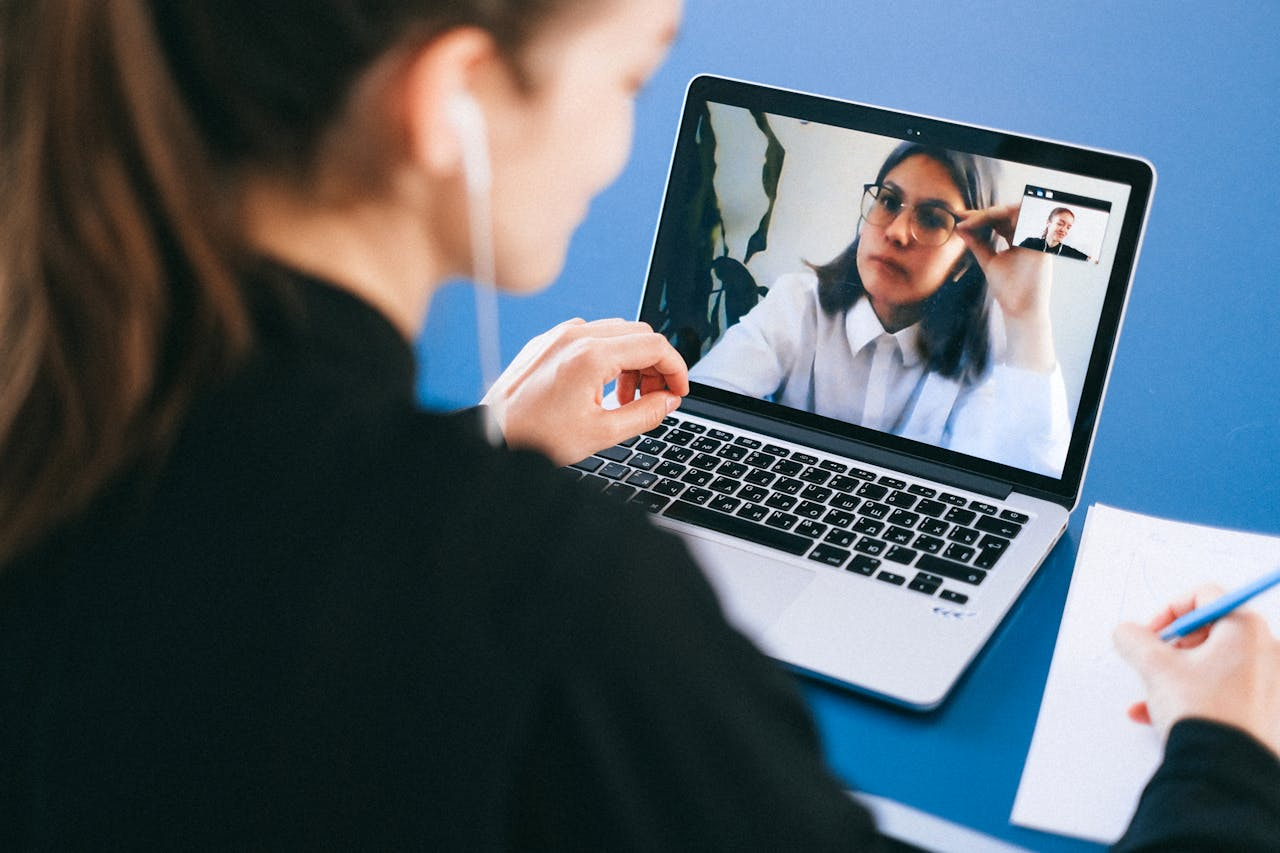
You’re three minutes into a session with Isabel (a composite case representing common telehealth experiences) when your cat jumps onto your desk, knocking over your coffee mug. Behind you, your teenage daughter’s TikTok music starts blaring from upstairs. Isabel laughs and says, “Your house feels so homey—nothing like those sterile office buildings.” Your stomach drops a little because Isabel just learned you have a teenager, live with pets, and apparently don’t have perfect control over your environment. In your old office, none of this would have happened.
Welcome to telehealth, where your living room reveals more about you in five minutes than your traditional office did in five years. Isabel’s comment isn’t just small talk—she’s responding to a completely different therapeutic experience. Your home communicates intimacy and accessibility in ways that make clients feel both more connected and more entitled to personal information. When she calls your space “homey,” she’s unconsciously shifting from patient to visitor in your home. Your office used to protect you through neutral walls, professional furniture, and controlled environment that created clear boundaries between your personal and professional life. Clients saw only what you chose to display: diplomas, carefully selected books, maybe one tasteful plant. Now they’re getting the unfiltered version of your life, and that changes everything about how the therapeutic relationship develops.
What’s Really Changed
Think about what Isabel experienced in those three minutes compared to a traditional office visit. She heard your family dynamics through your daughter’s music, learned you’re a pet owner when your cat knocked over your mug, and made assumptions about your parenting style, home life, organizational skills, and domestic situation—all before you’d even finished reviewing her treatment goals. This isn’t just about managing interruptions. You’re managing a fundamentally different power dynamic where clients witness your authentic daily life instead of entering your carefully controlled professional domain.
Some days that works beautifully. Other days, like when your spouse walks behind you in their underwear or your toddler has a meltdown in the next room, it creates complications your graduate training never covered. What happens next with clients like Isabel is predictable: she starts asking more personal questions because your home environment made her feel closer to you. She might comment on your décor, ask about your family, or share more intimate details about her own life because the formal boundaries feel less relevant. You’ll find yourself fielding questions that never would have happened in your office—”Is that your daughter I heard? She sounds about my daughter’s age” or “I love your bookshelf—we read the same authors!” or “Your dog sounds just like mine—what breed is that?” These questions feel innocent, even endearing, but each one pulls you further from your professional role and closer to a peer relationship that can complicate treatment.
This is an excerpt from the 4.5-CE course Telehealth Boundaries: When Your Home Becomes Your Office at SWTP CEUs. You can continue the full course—and earn continuing education credit—here.